


Help Us Keep Care Within Reach
December 1 is GivingTuesday, a global day of generosity that brings people together to support nonprofits and causes making a difference in their communities.
At Sadler Health Center, your generosity helps make a difference close to home. It helps us sustain access to vital health care services and ensure that individuals and families in our communities can get the care they need, regardless of their ability to pay.
That support is increasingly important. Changes to Medicaid could make it more difficult for some people to maintain health coverage and afford needed care. For community health centers like Sadler, this could mean greater financial pressure as more patients experience coverage interruptions or struggle to pay for care.
The financial challenge is already significant. In FY2025, Sadler’s audited financial statements reflected an estimated $5.9 million in costs associated with care not fully covered by patient payments and insurance reimbursement. This includes care for patients unable to pay, as well as the difference between the cost of providing care and reimbursement received for patients covered by Medicaid and Medicare.
Your support helps bridge that gap. Whether you give today or on GivingTuesday, December 1, your gift helps sustain the care our communities count on and keeps vital health care services within reach.
What Changing Medicaid Coverage Could Mean
Today, approximately 2.9 million Pennsylvanians – nearly one in four residents – rely on Medicaid for their health care. Beginning in 2027, new federal requirements will change how some adults maintain Medicaid coverage, including work or other qualifying community engagement requirements and more frequent eligibility reviews.
Pennsylvania estimates that approximately 310,000 people could lose Medicaid coverage as these changes take effect. Nearly 700,000 Pennsylvanians are already being contacted by the commonwealth about the new requirements.
For some individuals, keeping their coverage may also mean meeting new reporting requirements and navigating additional paperwork and deadlines. When coverage is interrupted, the need for a doctor, dentist, behavioral health provider or prescription medication does not go away.
As a federally qualified health center, Sadler is committed to providing care regardless of a patient’s ability to pay. But when patients lose coverage or cannot afford their care, more of the financial responsibility shifts to the health care safety net. That could create additional pressure on our organization already working to bridge the gap between the cost of care and available reimbursement.
A Way Forward, Together: Barry’s Story
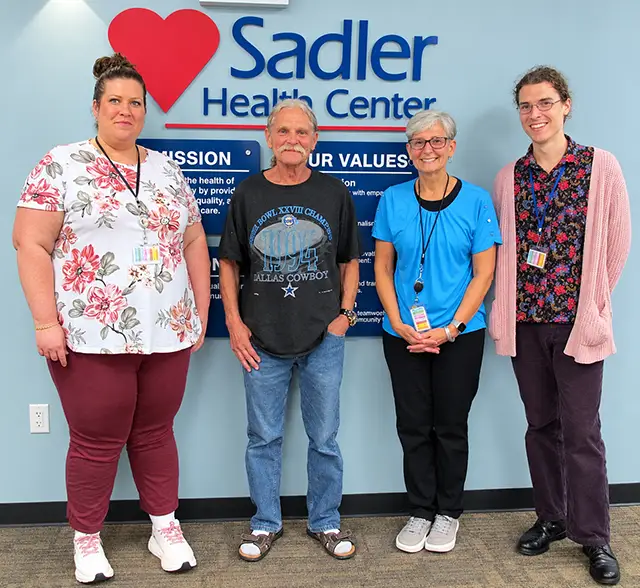
Behind these challenges are real people whose health and well-being depend on having somewhere to turn for care. Barry’s experience shows what that support can mean.
Barry came to Sadler in November 2024 after spending more than a decade incarcerated. He was ready for a fresh start and determined to build an independent life. But starting over wasn’t easy. Unable to read, he faced challenges navigating everyday tasks, including the health care system.
At Sadler, Barry found a team willing to help him take things one step at a time. Enrollment Specialist Pam Price helped him regain his Medicaid coverage. While that process was underway, Sadler helped him begin receiving care at a self-pay rate.
At his first appointment with Dr. Kent Copeland, Barry also met Community Health Worker April Piper. Over time, they built a relationship grounded in trust and understanding. April helped him find housing, navigate paperwork and make sense of mail he otherwise could not read.
Dr. Copeland also helped Barry catch up on preventive care he had missed during his years in prison. One important step was a referral to a local specialist for his first colonoscopy.
April helped schedule the appointment and arrange transportation. When Barry received detailed written instructions to prepare for the procedure, another barrier emerged: he could not read them. Rather than let that obstacle stand in the way, April turned the instructions into a simple visual calendar showing Barry what to do each day. She even met him at the grocery store to help him select the necessary supplies.
Barry successfully completed the preparation and colonoscopy, and thankfully, no concerns were found.
Today, Barry faces new health challenges, but he knows he does not have to navigate them alone. He has a care team that knows him, understands his needs and works alongside him to find a way forward.
This is what sustaining access to care looks like: bringing together the right people, helping patients overcome barriers and making sure they don’t have to face their health challenges alone.
Help make stories like Barry’s possible.
Caring for the Communities We Call Home
Barry’s story is one example of the difference accessible, compassionate care can make. Across Cumberland and Perry counties, Sadler works every day to help individuals and families get quality health services.
Recognizing the growing demand for care in the Mechanicsburg area, Sadler opened its West Shore location in December 2023. Support from donors like you helped make that expansion possible, bringing more health care services closer to individuals and families in the community.
Since opening, Sadler’s Mechanicsburg location has made a growing impact:
patients served
total visits
children served
Behind these numbers are real people and lasting connections: children building healthy futures, families finding reassurance and individuals receiving compassionate care when it matters most. The growth of this location shows what is possible when a community invests in the well-being of its neighbors.
As more people turn to Sadler, philanthropic support helps ensure we have the resources to meet that demand and remain a trusted source of health care.

Give Today. Help Keep Care Within Reach.
Whether you give today or on GivingTuesday, December 1, your generosity makes a difference.
Your gift helps Sadler provide essential health services, support patients facing barriers and keep care within reach for individuals and families throughout our communities.
Thank you!